Get Started with Mintlink Today!
Automate your “link please” comments and start earning today. Download the free Mintlink app!
Table of Contents
One question probably keeps coming back to you: Should I invest in influencer marketing or affiliate marketing? They are often treated like two separate worlds. But here’s the truth: affiliate marketing vs influencer marketing is not an “either/or” debate. You can win bigger when you understand how both models work and where they intersect.
Let’s break the concepts down clearly, compare them honestly, and show how combining both can dramatically accelerate growth.
What is Affiliate Marketing?
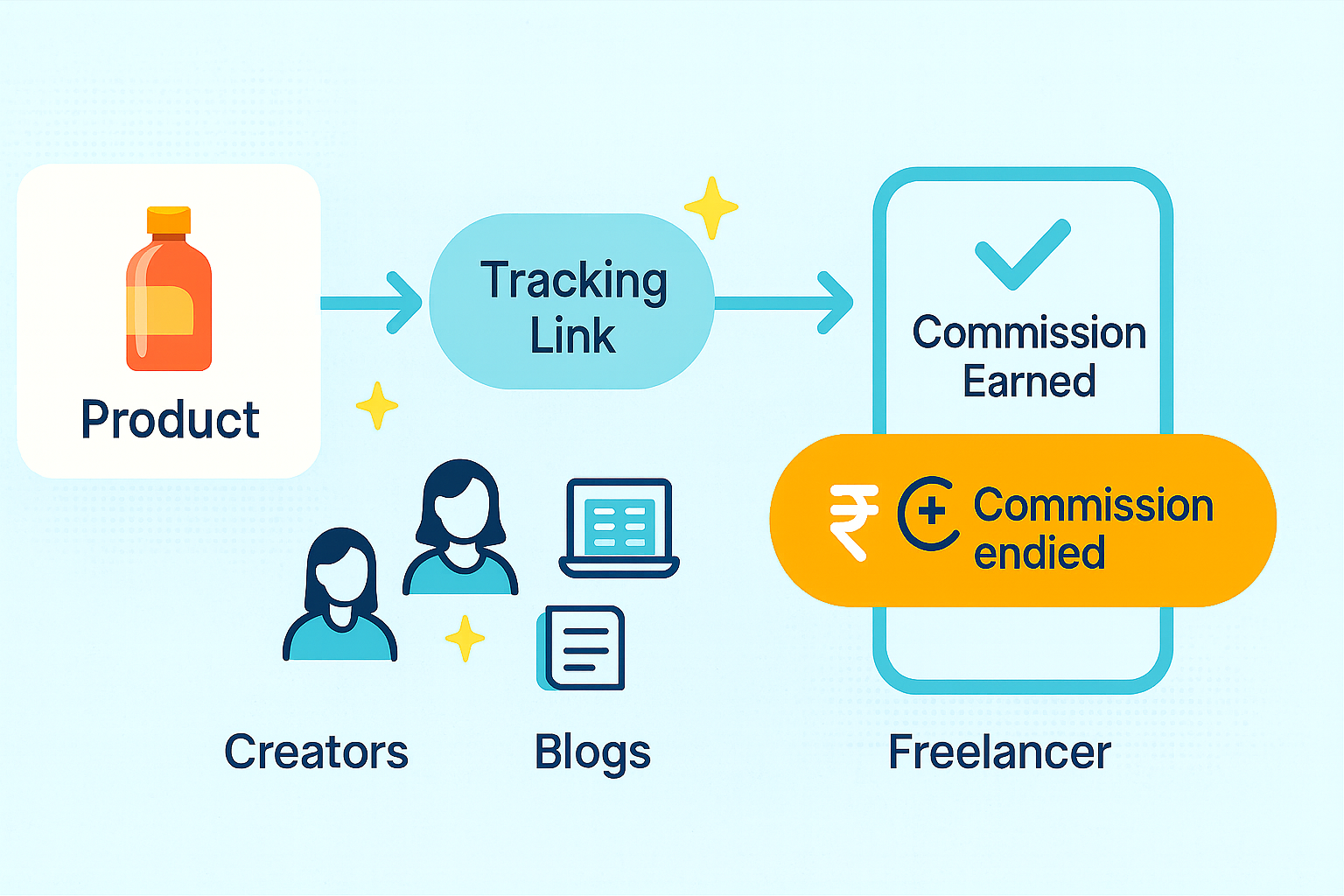
Affiliate marketing is one of the most straightforward ways to scale performance. You partner with affiliates, blogs, creators, communities, niche experts, or publishers who promote your product through unique tracking links.
Every time someone buys or completes a desired action through that link, the affiliate earns a commission.
- It’s performance-based: No conversions = no payout.
- Low-risk, high-reward: Perfect for brands that need predictable ROI.
Affiliate programs come in different styles—unattached, related, and involved—depending on how closely the affiliate aligns with the brand.
What Is Influencer Marketing?
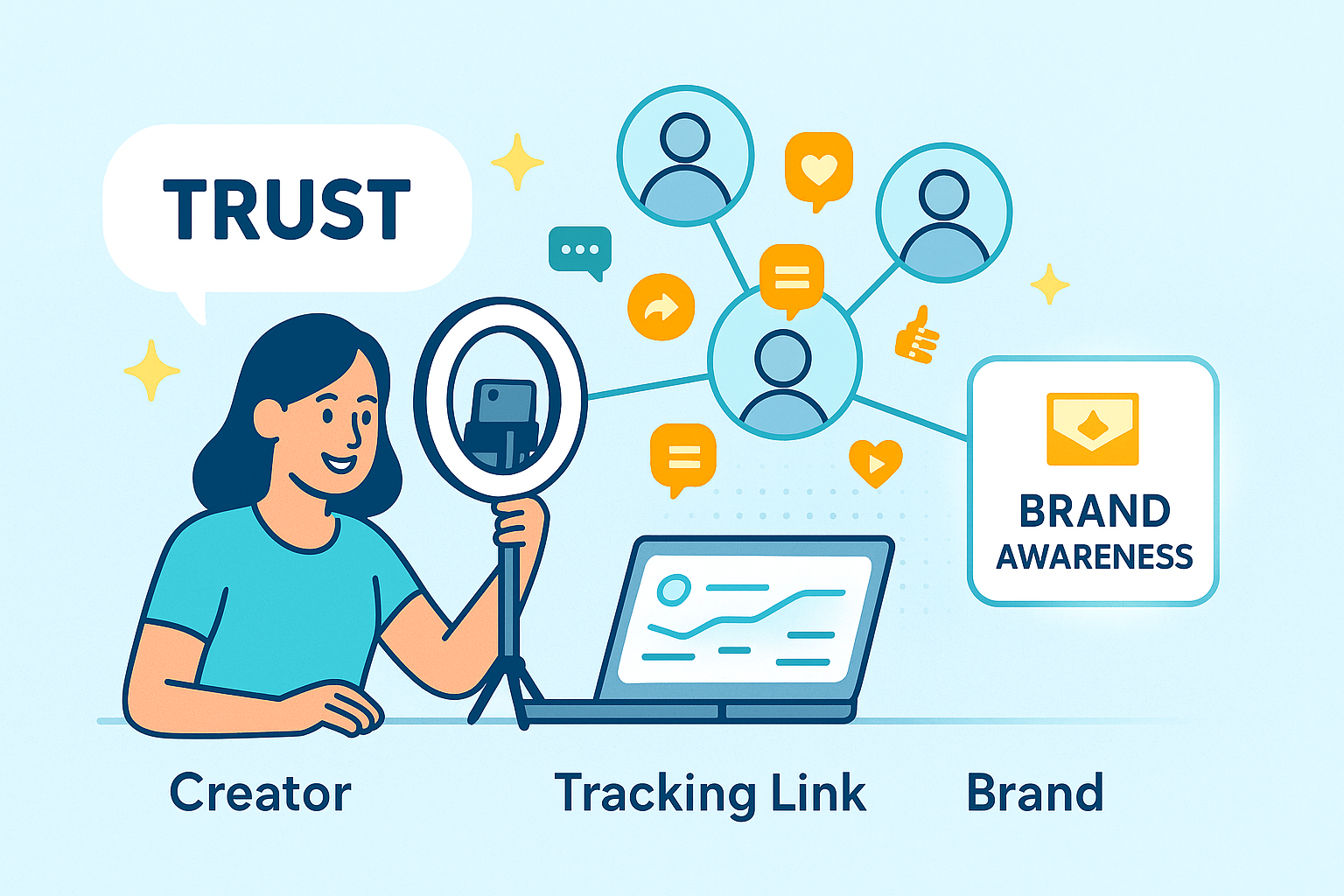
Influencer marketing taps into creator credibility instead of platform algorithms. You collaborate with creators who already hold the trust of their audience and can influence buying decisions through a wide mix of content formats.
- It’s credibility-driven: It focuses on generating buzz, shaping perception, and building cultural momentum.
- The New Landscape: Today, micro and nano creators are delivering the strongest engagement, because their communities see them as peers, not celebrities.
The Real Difference: Affiliate Marketing vs Influencer Marketing
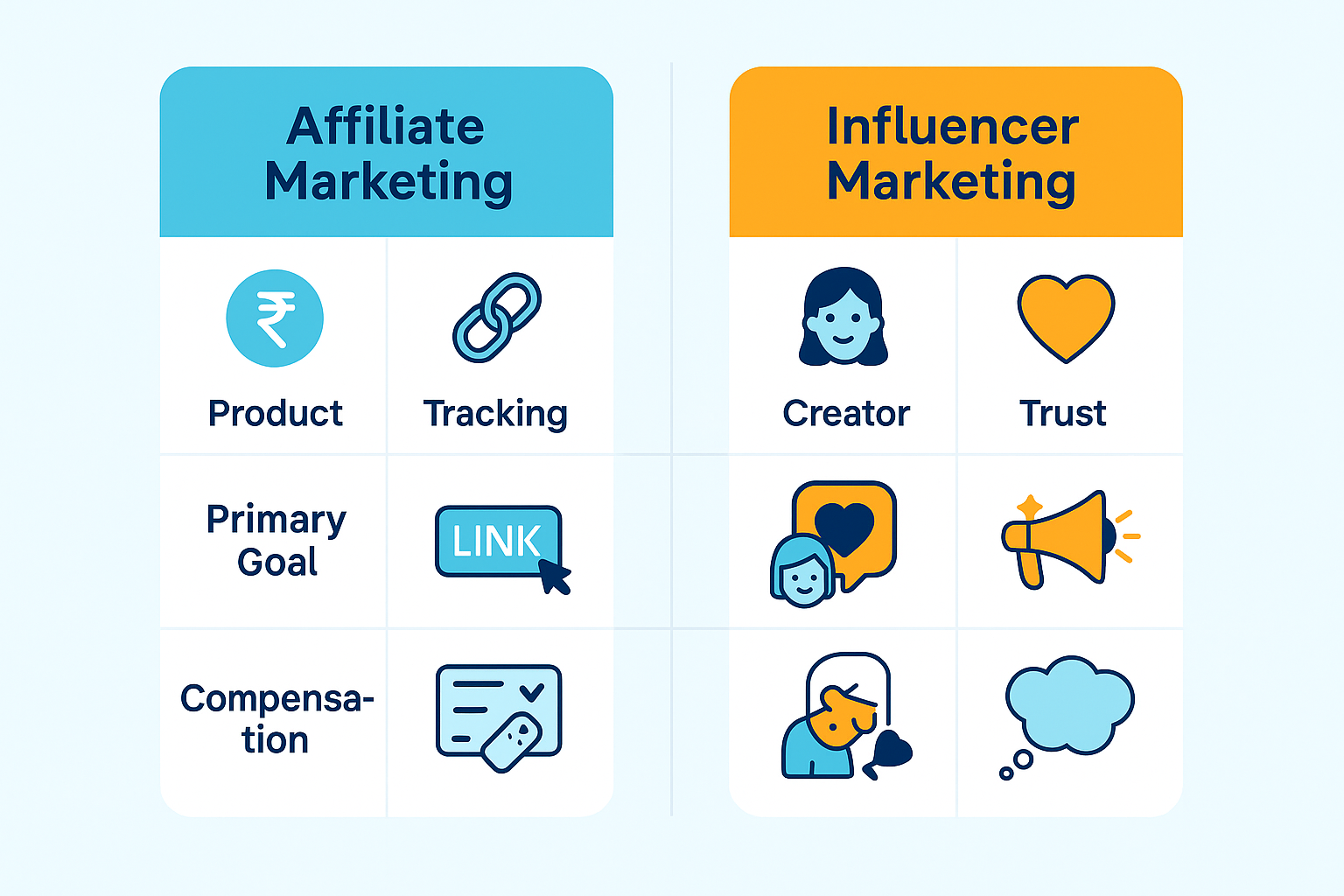
Although both strategies use third-party voices, the metrics, goals, and risks of affiliate marketing vs influencer marketing are fundamentally different.
| Factor | Affiliate Marketing | Influencer Marketing |
|---|---|---|
| Primary Goal | Conversions, Sales, Measurable ROI | Awareness, Brand Perception, Storytelling |
| Compensation | Pure Commission (Pay-per-sale) | Upfront Fee (Pay-per-post) + Optional Bonus |
| Tracking | Fully Trackable (Links, Coupons) | Difficult (Often stops at views/reach) |
| Risk to Brand | Low Risk (Only pay upon sale) | High Risk (Paying for engagement that might be fake) |
Pros & Cons of Affiliate Marketing
Brands love affiliate marketing because it’s incredibly easy to set up, requires almost no cost until actual results start coming in, and scales with very low risk. With precise ROI tracking and a steady flow of niche-specific, high-intent traffic, affiliate programs become a predictable revenue channel.
- Where it gets tricky: Affiliates may misrepresent products if brands don’t monitor messaging closely, and meaningful results usually require significant traffic before conversions scale.
Pros & Cons of Influencer Marketing
Influencer marketing works incredibly well because it taps directly into trust, culture, and community. Consumers trust opinions shared online. Creators already have loyal audiences, boosting brand perception and helping brands enter new demographics with ease.
- Where it gets tricky: It can get expensive (especially with macro creators), and the ROI is often not straightforward to measure. There’s also the risk of PR issues if an influencer makes a mistake.
Which One Should You Choose? A Strategic Breakdown
- Choose Affiliate Marketing if: You prioritize predictable conversions, fully trackable sales, and a passive revenue engine that compounds over time. It’s a cost-efficient, low-risk growth system.
- Choose Influencer Marketing if: Your priority is rapid visibility, brand recall, and emotional resonance. It’s the ideal route when you want to build trust quickly and generate immediate buzz for launches.
The Hybrid Model: Mintlink as the Unifying Engine
The smartest brands don’t choose between affiliate marketing vs influencer marketing; they combine them.
Imagine a creator posting a Reel about your product, adding an affiliate link, and earning for every conversion. On your side, you get: the trust and credibility of influencer marketing + the measurability of affiliate systems.
How Mintlink Makes the Hybrid Model Work:
- Unified Measurement: Mintlink serves as the central platform for both strategies. It tracks the sales generated by a creator’s affiliate link (the affiliate side) while tracking the post performance (the influencer side) in one dashboard.
- Automation of Conversion: Mintlink empowers creators to operate as performance partners. By using Mintlink’s tools, a creator can automate affiliate links and conversion flows, ensuring that the traffic they generate turns into a sale. This is how Mintlink simplifies the workflow.
- Cost-Control & Scalability: This hybrid model eliminates the budget risk. You pay the influencer a small flat fee for the content (to secure the post) and a generous commission on sales (the affiliate payout). This hybrid model is key to scaling creator revenue.
When authenticity meets measurable affiliate systems, campaigns become lighter to manage, yet far more scalable.
Conclusion: The Future is Complementary
Affiliate marketing vs influencer marketing are not competitors; they are complementary. Influencers help you shape perception, build trust, and generate buzz. Affiliates help you track, scale, and convert that buzz into revenue.
The future belongs to brands that blend storytelling with performance and creators who can play both roles.
Frequently Asked Questions (FAQs)
Q1: What is the main difference in cost? A: Influencer marketing requires a fixed, upfront cost (the flat fee). Affiliate marketing is pay-on-results (commission only), making it the lower-risk option for predictable ROI.
Q2: Can I use one creator for both affiliate and influencer marketing? A: Yes, this is the hybrid model. You hire a creator for a fixed fee to make the post, and you also give them an affiliate link to earn a commission on sales. This aligns their goals with yours (sales).
Q3: Why is tracking difficult in influencer marketing? A: Traditional tracking stops at “impressions” because the content lives on the social platform. Affiliate tracking is easier because the content directs users to a unique link off the platform, which can be tracked perfectly.