Get Started with Mintlink Today!
Automate your “link please” comments and start earning today. Download the free Mintlink app!
Table of Contents
TThe landscape of influencer marketing is undergoing a rapid transformation, and the most important influencer marketing trends 2026 will define the next five years. This is not about new platforms, but about a fundamental shift in strategy. The era of depending solely on mega-influencers boasting millions of followers is declining. Instead, brands are turning to micro and nano-influencers—creators with smaller audiences but significantly higher levels of trust and engagement.
With the help of AI-driven insights, localized efforts, and strategies focused on measurable performance, companies are reevaluating their approach. The aim now is to achieve tangible results rather than just chase vanity metrics. This evolution is particularly critical in industries such as fashion, technology, lifestyle, beauty, and health where authenticity plays a pivotal role.
In this article, we will explore the 5 prominent influencer marketing trends for 2026 and discuss the strategies that businesses should adopt today.
The Top 5 Influencer Marketing Trends 2026
1. The Rise of Micro and Nano Influencers
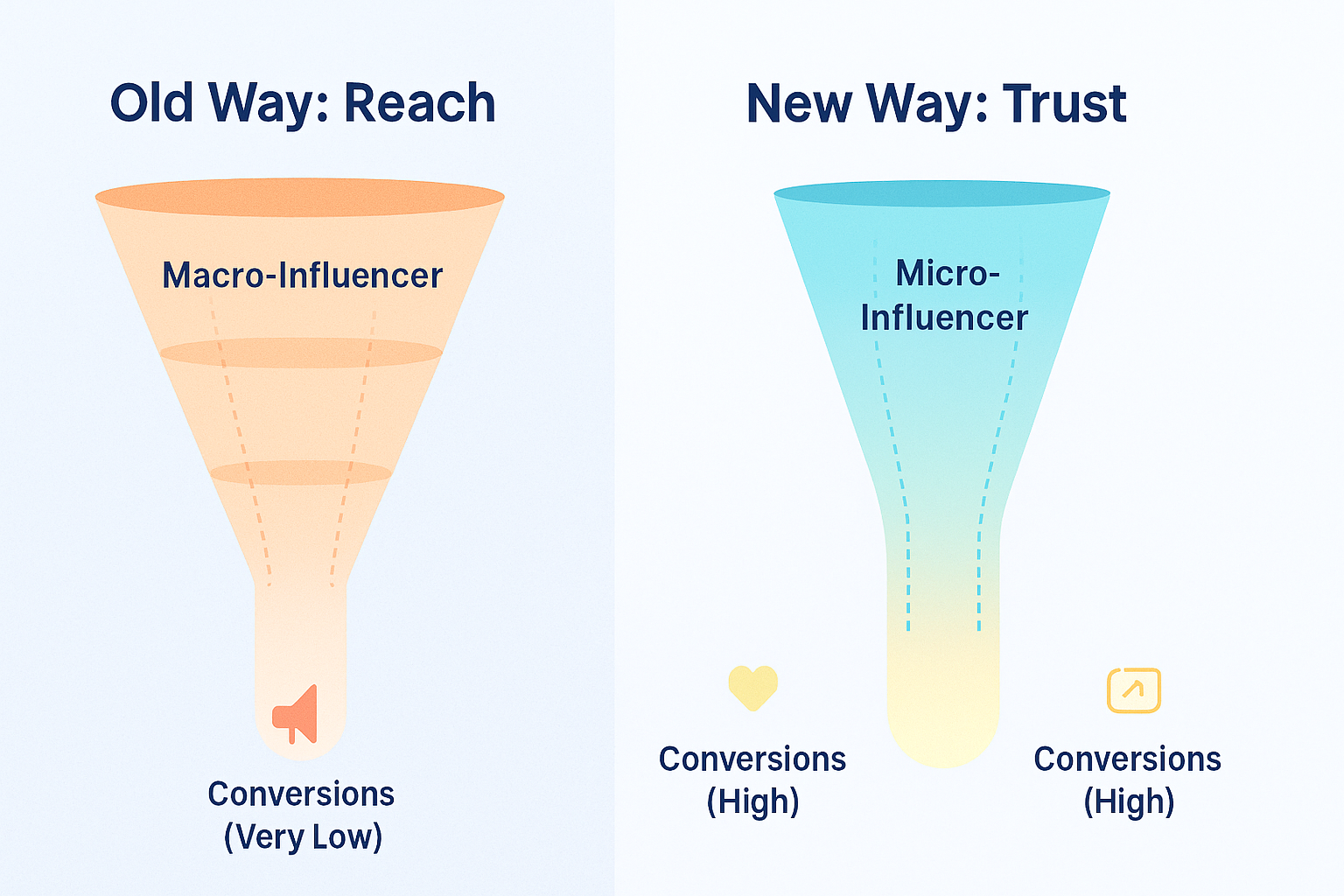
A significant trend is the shift in focus from “reach” to “relatability.” Brands are realizing that influence is not just about follower count.
- Micro-Influencers (10,000 to 100,000 followers):
- Concentrate on specific topics (such as fitness, beauty, travel, or tech).
- Perceived as relatable authorities rather than traditional celebrities.
- Benefit from elevated engagement and conversion rates due to high trust.
- Nano-Influencers (Less than 10,000 followers):
- Achieve some of the highest engagement rates in the industry (7-10%).
- Ideal for targeted local marketing efforts or promoting niche products.
- Viewed as genuine individuals, making their endorsements feel like authentic advice from a friend.
Why this matters in 2026: Brands collaborating with micro-influencers can experience a 60% boost in engagement compared to those partnering with macro-influencers. Successful influencer marketing will prioritize this deep engagement and authenticity over sheer follower numbers. This is great news for how micro-influencers earn and for the brands that partner with them.
2. The Shift to Performance, ROI, and Authenticity
In the current market, brands seek more than just visibility; they demand quantifiable outcomes. The “pay for a post and hope for the best” model is dead.
Tracking ROI (Return on Investment)
Advanced AI tools and new platforms now enable brands to monitor:
- Engagement levels (beyond simple likes)
- Click-through rates (CTR)
- Conversion numbers (actual sales)
- Customer reviews and sentiment
- Mentions and shares
Every marketing initiative is increasingly rooted in data and closely aligned with key performance indicators (KPIs) such as lead generation, sales figures, and overall brand recognition. This move to a performance-based model is a key influencer marketing trend for 2026, as it’s the only way to prove if influencer marketing actually works.
The Technology Layer: How to Track Performance (The Mintlink Solution)
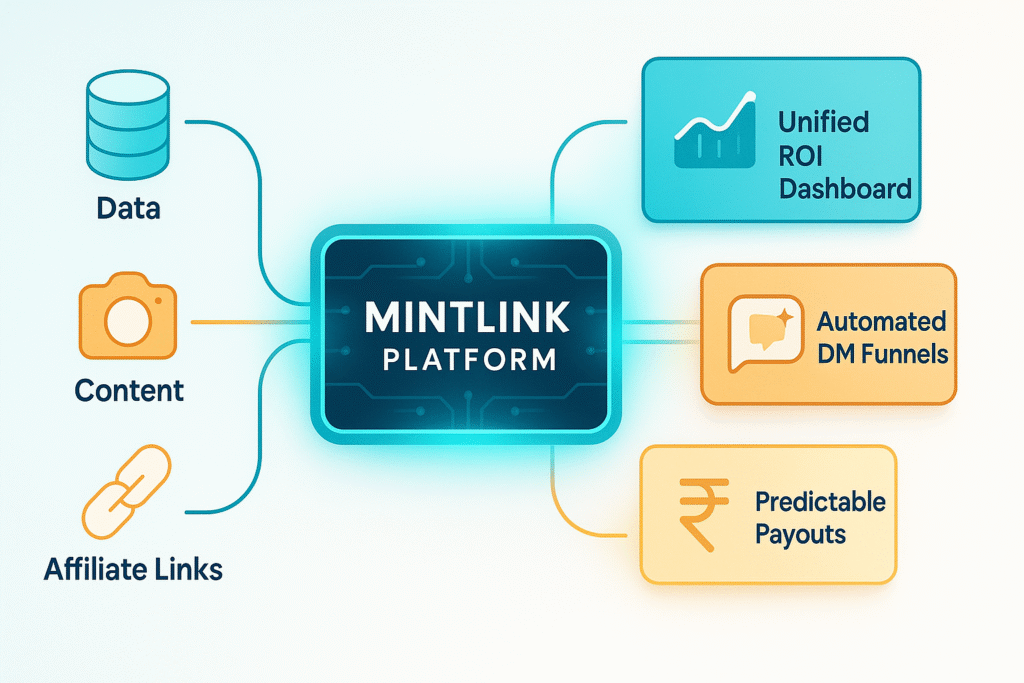
This shift to ROI tracking is the single most important trend for brands and creators. But how do you actually track it? A spreadsheet can’t handle 50 creators, each with different links and coupon codes.
This is where a performance-based platform like Mintlink becomes essential. Mintlink is an “affiliate aggregator” and automation tool built for this new era.
- It Solves ROI Tracking: Mintlink provides a single, unified dashboard for brands. You can see every click, conversion, and sale generated by every influencer in your network, all in real-time. This solves the #1 problem of ROI ambiguity.
- It Enables Performance Payouts: It’s built on the affiliate model. This allows you to stop “paying for posts” and start paying for performance (i.e., the sales they drive).
- It Empowers Creators with Automation: Mintlink is also a creator tool. It gives your influencers Instagram Comment Automation. When a user comments “link please” on their post, Mintlink instantly DMs your product link, ensuring a lead is never lost and attribution is perfectly tracked.
The Importance of Authenticity
Consumers today are discerning. They quickly recognize artificial or overly scripted promotions. To ensure authenticity: ✔ Allow influencers creative leeway. ✔ Establish enduring, long-term partnerships. ✔ Promote user-generated content (UGC). ✔ Collaborate with creators whose principles align with your brand.
Authentic content leads to increased engagement, which, when tracked correctly with a tool like Mintlink, translates directly into improved ROI.
3. Platform Diversification Beyond Instagram
Although Instagram and YouTube continue to dominate, 2025–2026 will see a major shift in the platforms where influencers excel. Brands are channeling their resources into more diverse platforms:
- LinkedIn: The primary hub for B2B influencers and thought leaders. Tech companies, SaaS providers, and startups are heavily investing here.
- Pinterest: A strong contender for e-commerce businesses, Pinterest is ideal for fashion, home décor, and food-related content. Its strength is long-lasting discoverability; a pin can drive traffic for years.
- Localized & Regional Platforms: These apps are excellent for geo-targeting opportunities—especially in areas like MENA, Southeast Asia, and India where local applications are rapidly gaining traction.
- YouTube Shorts: This format offers concise video content that enhances brand visibility while making virality more cost-effective.
4. The Boom in Geo-Targeting & Regional Content
This is one of the most powerful influencer marketing trends for 2026, especially in India. Brands can now connect with creators who resonate linguistically and culturally within specific regions (e.g., Tamil, Bengali, or Marathi-speaking audiences). This makes their campaigns feel more local, relatable, and impactful than a one-size-fits-all national campaign.
5. AI-Driven Insights and Automation
As mentioned, AI is the engine powering most of these trends. In 2026, AI is no longer a buzzword; it’s a standard tool. Brands are using AI-driven insights to:
- Find Influencers: Analyze an influencer’s audience for “fake followers” or bot engagement.
- Forecast Results: Predict a campaign’s potential ROI before spending.
- Automate Content: Scale the creation of authentic, user-generated-style content (AI UGC).
Content Types and Engagement Techniques for 2026
A varied content strategy yields better outcomes. The following formats are expected to excel:
- Short-Form Videos (Reels, Shorts): Focus on capturing interest within the first three seconds. These are ideal for showcasing products, creating hooks, and telling stories.
- Stories & Live Streams: Well-suited for product demonstrations, behind-the-scenes glimpses, Q&A sessions, and launches.
- Carousel Posts: Effective for tutorials, detailed guides, and narrative storytelling.
- Blogs & Guest Contributions: Enhance SEO performance while helping brands engage with an influencer’s audience.
- User-Generated Content (UGC) Campaigns: Genuine, relatable material that proves to be very convincing. UGC remains a top-performing format in terms of conversion rates.
Challenges and How to Overcome Them
- Oversaturation of Sponsored Content: Consumers are experiencing “ad fatigue.”
- The Solution: Focus on storytelling, creativity, and authentic voices (micro-influencers) instead of repetitive sales pitches.
- Fake Followers and Engagement: Some influencers inflate their metrics with bots.
- The Solution: Brands must use AI-driven fraud detection tools and analytics dashboards (like Mintlink’s) to verify engagement quality.
- Constant Platform Changes: Algorithm updates can limit reach overnight.
- The Solution: Diversify across platforms and build “owned” communities (like newsletters, WhatsApp, or Telegram channels) to ensure stability.
Frequently Asked Questions (FAQs)
Q1: What are the most important influencer marketing trends for 2026? A: The top 5 trends are: 1) The rise of trusted micro- and nano-influencers, 2) A hard shift to measuring performance and ROI (not just “reach”), 3) Diversifying to new platforms like LinkedIn and Pinterest, 4) Using AI for insights and automation, and 5) Geo-targeting with regional-language creators.
Q2: Why are brands choosing micro-influencers over celebrities? A: Trust and engagement. Micro-influencers are seen as more relatable and authentic, like a trusted friend. Data shows they have a 60% higher engagement rate, which often leads to a better and more measurable return on investment (ROI).
Q3: How do I measure the ROI of influencer marketing? A: Stop tracking “vanity metrics” like likes. The best way is to use a performance-based model, which is a major trend for 2026. Use platforms like Mintlink that provide affiliate links and trackable coupon codes. This allows you to see every click, conversion, and sale, giving you a true, data-driven ROI.
Conclusion: The Future is Authentic and Measurable
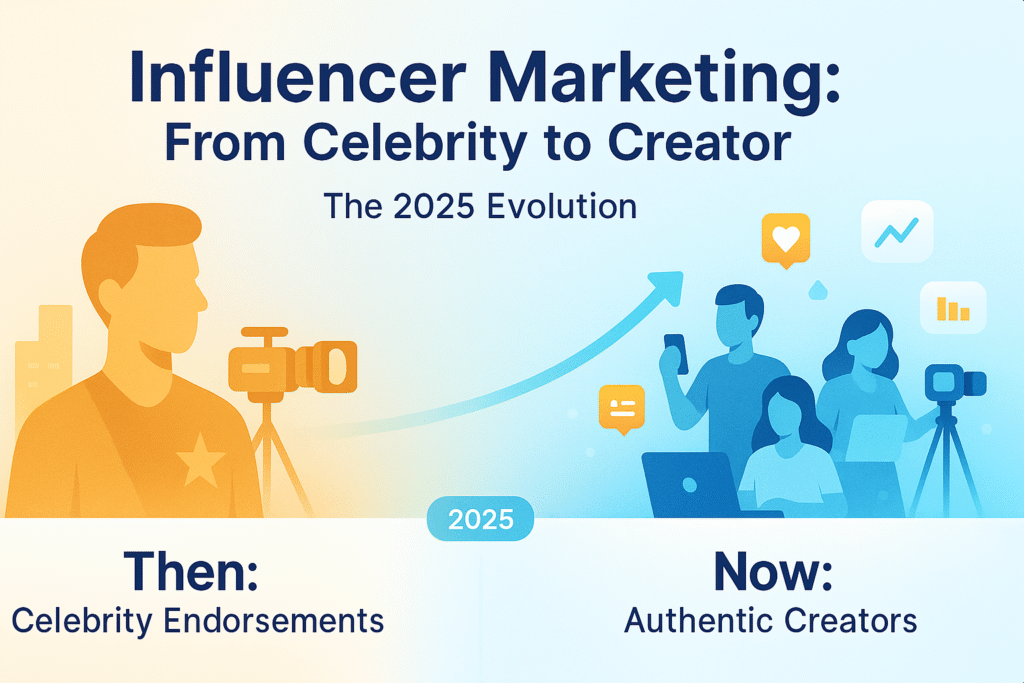
The evolution of influencer marketing in 2026 is clear. It’s moving from “reach” to “results,” from “celebrity” to “community,” and from “manual” to “automated.”
The brands that win will be those that listen, adapt, and collaborate meaningfully. As influence becomes more human and measurable than ever, success lies in one simple truth: people trust people.
That trust, when nurtured with integrity and amplified by smart, data-driven tools like Mintlink, is the most powerful marketing force of all.