Get Started with Mintlink Today!
Automate your “link please” comments and start earning today. Download the free Mintlink app!
Table of Contents
In the last decade, brands have repeatedly asked the same question: why influencer marketing? And the answer continues to remain the same—because it works. Today, the power of influencer marketing is no longer considered a passing trend; it has evolved into a strategic, data-driven model that helps brands communicate authentically with their target audiences.
Whether it’s a startup or a global enterprise, companies are increasingly partnering with creators through an influencer marketing agency, creator-led platforms, and specialized internal teams to boost visibility, build trust, and drive conversions in a highly competitive digital world.
What Is Influencer Marketing?
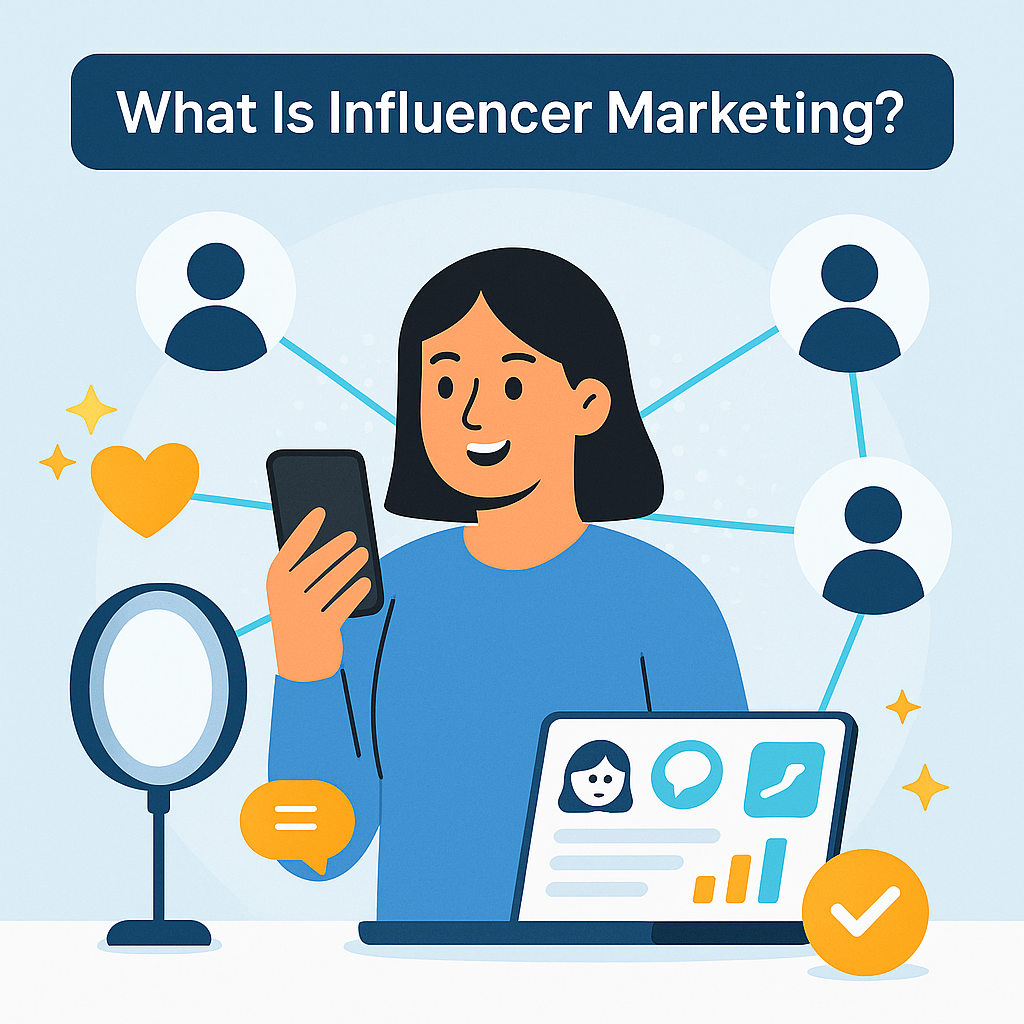
To truly understand its impact, we must begin with the basics. Influencer marketing is a form of social media marketing where brands collaborate with creators who have built influence within a specific niche—be it fashion, food, fitness, gaming, travel, finance, or lifestyle. These collaborations take place across platforms such as Instagram, YouTube, TikTok, and LinkedIn, where creators hold community trust and credibility.
Why Influencer Marketing Is Important
Brands operate in an oversaturated digital environment where audiences skip ads, ignore banners, rely heavily on reviews, and seek recommendations from real people. This is exactly why influencer marketing is important: it breaks through digital noise with authenticity.
People trust influencers more than brand-led advertising because creators present content in a relatable, human manner. Influencer marketing also drives higher engagement and stronger purchase intent, making it extremely effective across industries like FMCG, beauty, skincare, tech, health, and lifestyle.
Why Influencer Marketing Works
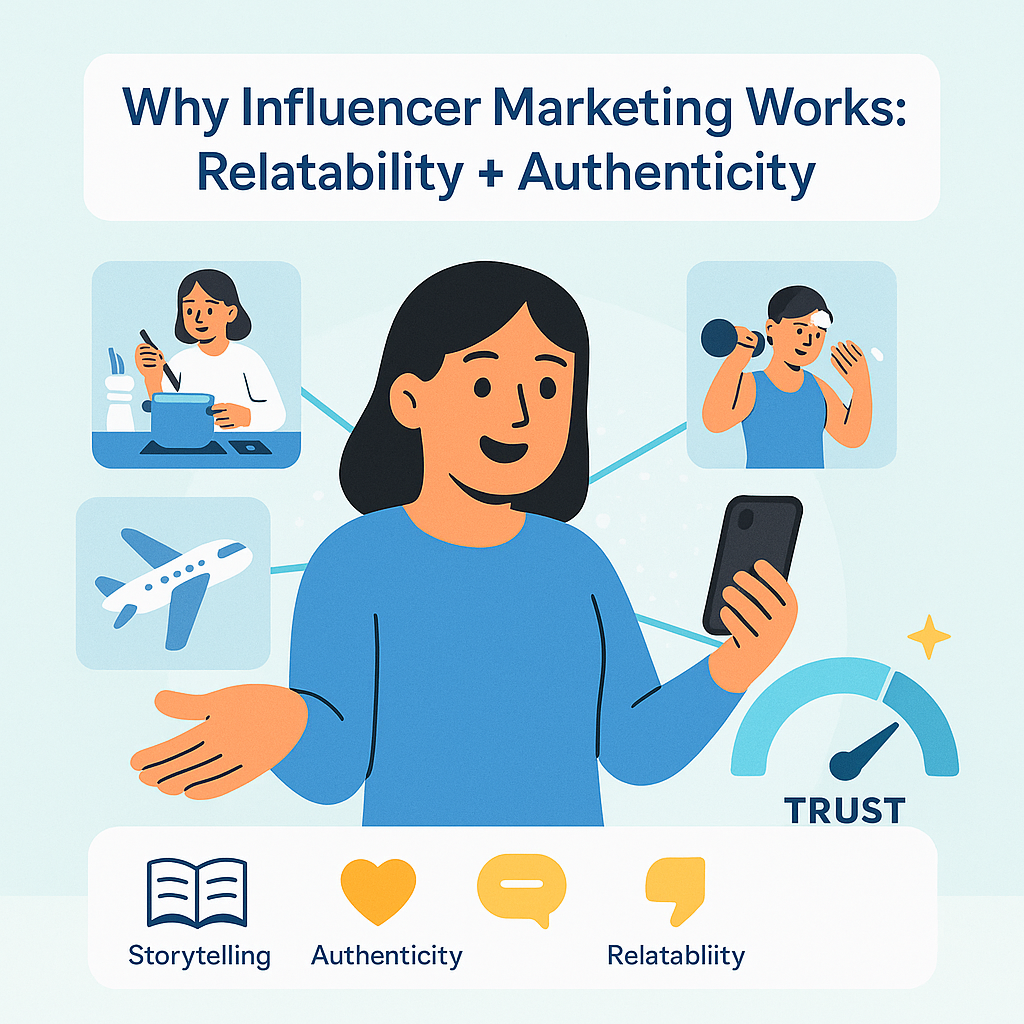
So, why does the power of influencer marketing work so well? The answer lies in the unmatched relatability it offers. Traditional advertising pushes a message; influencer marketing shares it through storytelling, opinion, and personal experience. This makes recommendations feel genuine, not promotional.
Authenticity remains the biggest reason why influencer marketing works, enabling brands to achieve higher engagement, stronger recall, and measurable performance. Many global companies streamline their campaigns through platforms like The Influencer Marketing Factory, which acts as a global influencer marketing hub.
Growing Demand for Influencer Marketing Agencies in India
As the creator economy grows, so does the demand for an influencer marketing agency in India. Brands need professional support to manage large-scale, data-driven campaigns. An experienced influencer marketing agency India helps brands navigate the digital creator ecosystem efficiently.
These agencies also focus on building long-term influencer partnerships to ensure consistent and meaningful brand collaborations. Examples include top Indian agencies like Whoppl, Sociowash, OPR India, The Good Creator Co., One Impression, and Chtrbox, which have managed campaigns for major brands such as Amazon, Lakmé, Meesho, and Nykaa.
Influencer Marketing Jobs: A Growing Career Path
The rise of influencer marketing has opened a wide range of opportunities for professionals. Roles like influencer campaign manager, talent strategist, content planner, creator acquisition specialist, and performance analyst are becoming increasingly common.
As more influencer-first companies and agencies expand, influencer marketing jobs are growing rapidly, making it one of the fastest-developing career paths in modern digital marketing.
Why Use Influencer Marketing Over Traditional Ads?
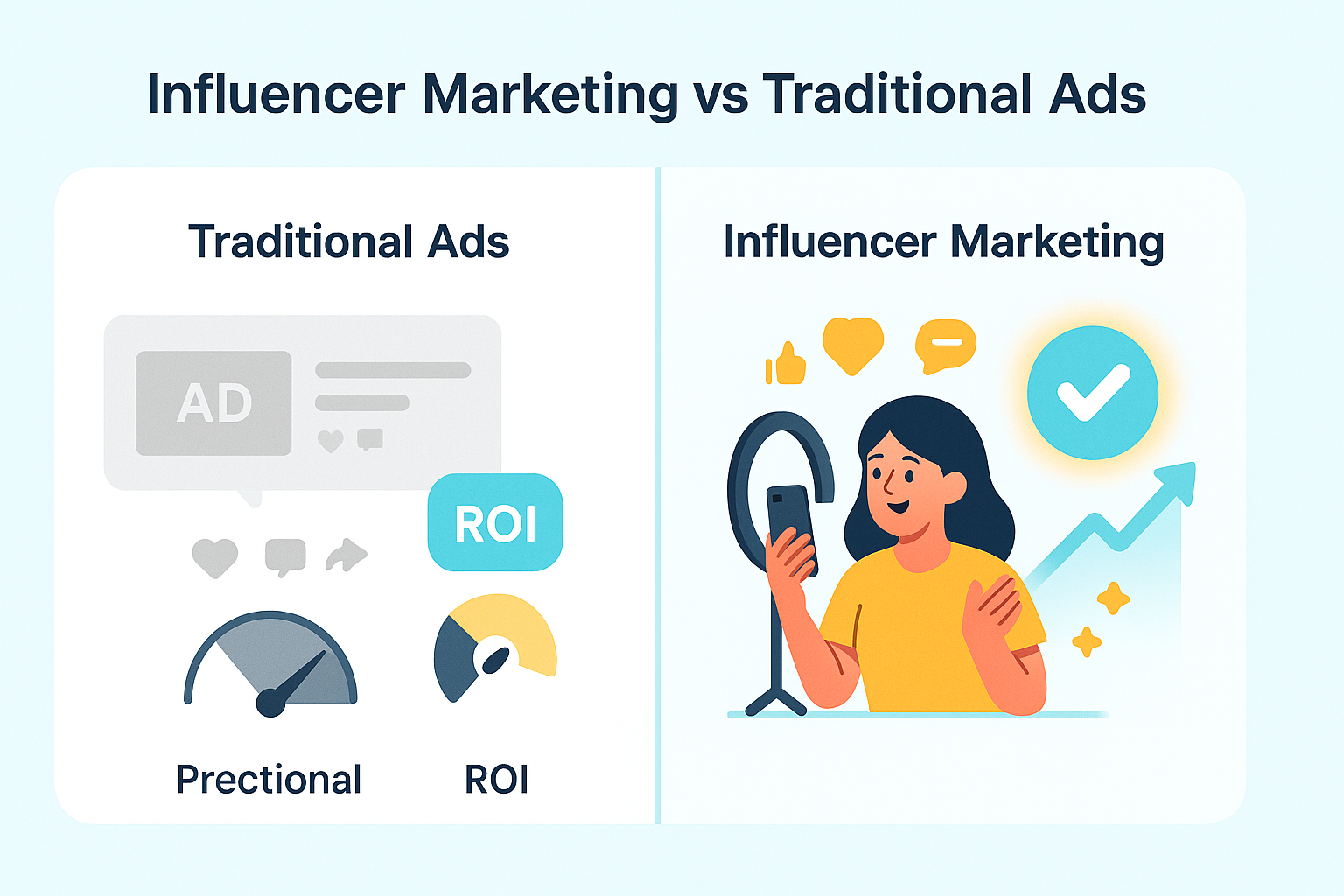
Brands often wonder why use influencer marketing when they already run paid ads. The powerful advantages explain the necessity:
- Trust & Storytelling: It enhances brand storytelling, allowing creators to deliver your message in a way that feels real and relatable.
- Niche Access: It helps brands reach niche, hyper-targeted communities that traditional ads often fail to access.
- SEO & Organic Visibility: Influencers generate online conversations and organic visibility, boosting brand presence.
- Long-Term Loyalty: Collaborations help build long-term brand loyalty because people connect emotionally with creators they follow.
- Data & Metrics: It allows for a data-driven model that provides measurable performance metrics, unlike the ambiguity of traditional awareness campaigns.
Is Influencer Marketing Ever Bad? (And How to Solve It)
While influencer marketing is powerful, it can have drawbacks if not executed correctly. Brands must understand the risks to avoid costly mistakes.
- Risk 1: Inauthentic Messaging: Problems occur when engagement metrics are inflated, leading to misleading results and poor ROI. Inauthentic messaging weakens trust and makes campaigns feel forced.
- Risk 2: Wrong Fit: Challenges arise when brands select the wrong influencers who do not match their values or audience.
- Risk 3: Ambiguous ROI: Without proper strategy or monitoring, campaigns lack direction and deliver weak performance.
However, with the right agency, creators, and data-driven strategy, these issues can be minimized effectively.
The Missing Link: Converting Trust into Trackable Sales (The Mintlink Engine)
The core challenge that prevents brands from realizing the full power of influencer marketing is the disconnect between trust (the psychological win) and sales (the measurable ROI).
The Problem: Ambiguous ROI
While trust drives high purchase intent, that intent is often lost in translation. A brand pays for a post, but without a perfect system, they can’t prove that the influencer drove the sale. This forces marketers to rely on vague “awareness” metrics.
The Mintlink Solution: Closing the Loop
Mintlink serves as the essential technology layer that closes this loop. By enabling an affiliate-first approach, Mintlink ensures that the trust earned by the creator is instantly converted into trackable, measurable sales.
- Trackable Performance: Mintlink provides the data that marketers need to prove ROI, making every click and conversion traceable.
- Automation of Conversion: Mintlink equips creators with tools to automatically send affiliate links via DM in response to comments, maximizing the psychological impulse to buy and capturing leads instantly.
- Scalable Trust: This allows brands to shift to long-term performance partnerships, rewarding authentic creators and fostering a sustainable ecosystem.
Conclusion: The Irreplaceable Value of Influence
To summarize, why do influencer marketing? Because it offers undeniable advantages: it builds trust, drives traffic, increases conversions, strengthens community, improves brand recall, and delivers cost-effective results.
The power of influencer marketing has grown into one of the most impactful pillars of modern digital strategy. It blends storytelling, authenticity, and performance—something no other marketing channel can replicate as seamlessly.
The future undeniably lies in authentic influence, amplified by smart tools.
Frequently Asked Questions (FAQs)
Q1: What is the main power of influencer marketing? A: The main power is the ability to break through ad noise by leveraging human trust and relatability. It shifts a brand’s message from being a “push” (an ad) to a “recommendation” (advice from a peer).
Q2: What is the biggest downside of influencer marketing? A: The biggest downside is the ambiguity in measuring ROI (Return on Investment) and the risk of inauthenticity. Both are solved by switching to a performance-based (affiliate) model and using analytics tools.
Q3: How does Mintlink solve the problems of traditional influencer marketing? A: Mintlink provides the technology to eliminate the two biggest risks: it solves the ROI ambiguity by making sales traceable through affiliate links, and it promotes authenticity by helping creators earn money consistently without relying on forced brand deals.