Get Started with Mintlink Today!
Automate your “link please” comments and start earning today. Download the free Mintlink app!
Table of Contents
You’ve heard it everywhere – declining reach, audience fatigue, rising creator competition. But the biggest question remains: Does influencer marketing work anymore? The real problem isn’t influencer marketing itself. The problem is the old way of doing influencer marketing.
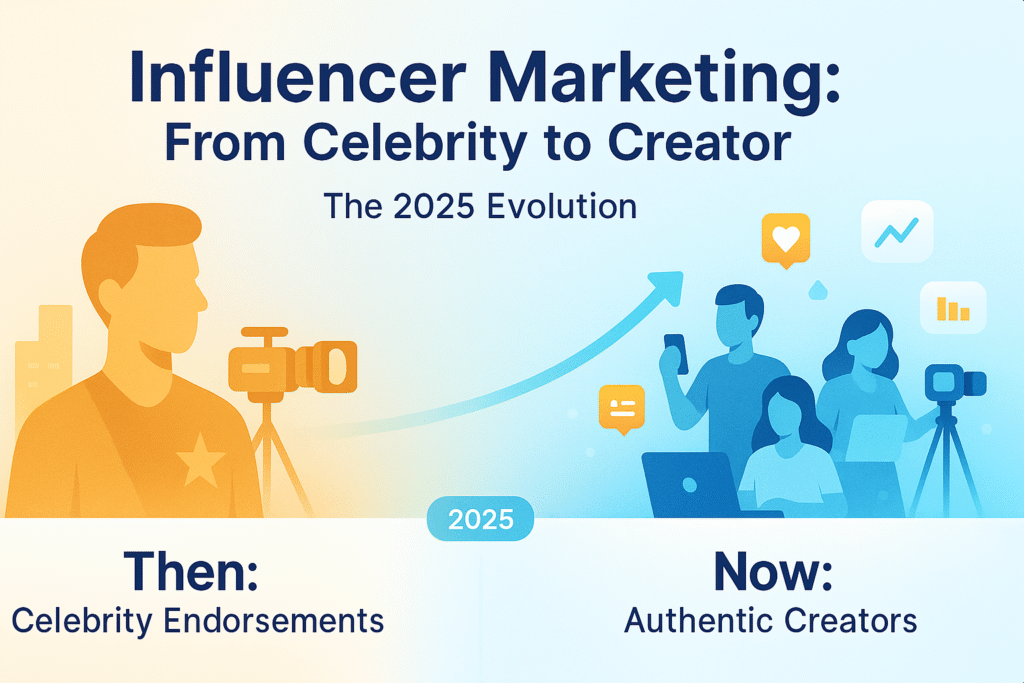
Influencer marketing hasn’t stopped working. It has simply evolved, and brands that evolve with it are seeing record-breaking ROI.
1. Audiences Are Smarter — And That’s a Good Thing
Consumers today are selective. They scroll past:
- forced endorsements
- scripted product placements
- irrelevant influencer-brand collaborations
But this doesn’t mean they’ve stopped trusting creators. It means they trust only those who deliver real value.
Example: Ankush Bahuguna
Known for skincare and grooming content, he performs well because:
- he educates genuinely
- his product explanations feel natural
- his reviews don’t feel like ads
Brands working with him consistently see higher saves, shares, and comments — proving that authenticity still converts. Influencer marketing didn’t stop working — inauthentic content did.
2. What Doesn’t Work Today: The Old Playbook
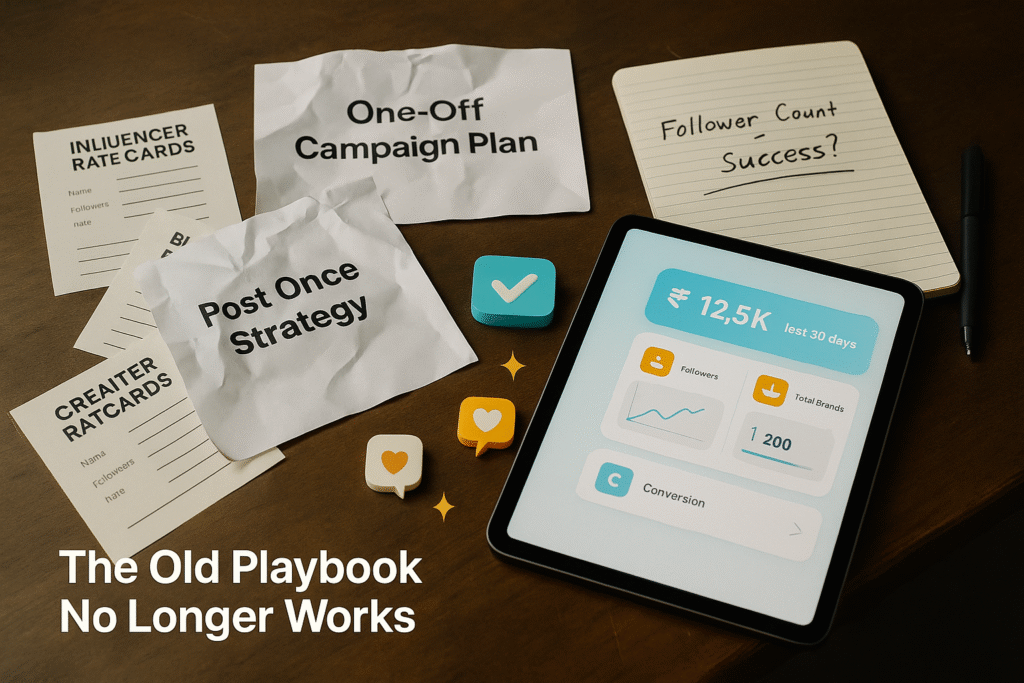
The “post once and pray” era is gone. Outdated tactics are what made people believe influencer marketing lost impact.
The old playbook that no longer works
❌ One-off campaigns ❌ Picking influencers purely based on follower count ❌ Trying to sell in a single reel ❌ No measurable metrics ❌ Generic scripts with no personality ❌ Relying on Instagram posts alone
These approaches feel outdated to modern audiences.
What works now
✔️ Creator-led education ✔️ Multi-touchpoint campaigns ✔️ Real reviews ✔️ Long-term partnerships ✔️ Tracking conversions ✔️ Leveraging IG + YouTube + Shorts
Example: Mamaearth
They didn’t rely on just big influencers. They scaled consistently with micro and regional creators, delivering:
- product demos
- ingredient breakdowns
- routine-based explanations
This helped them gain trust and scale rapidly — not because influencer marketing is dying, but because they adapted.
3. Performance Is the New Priority
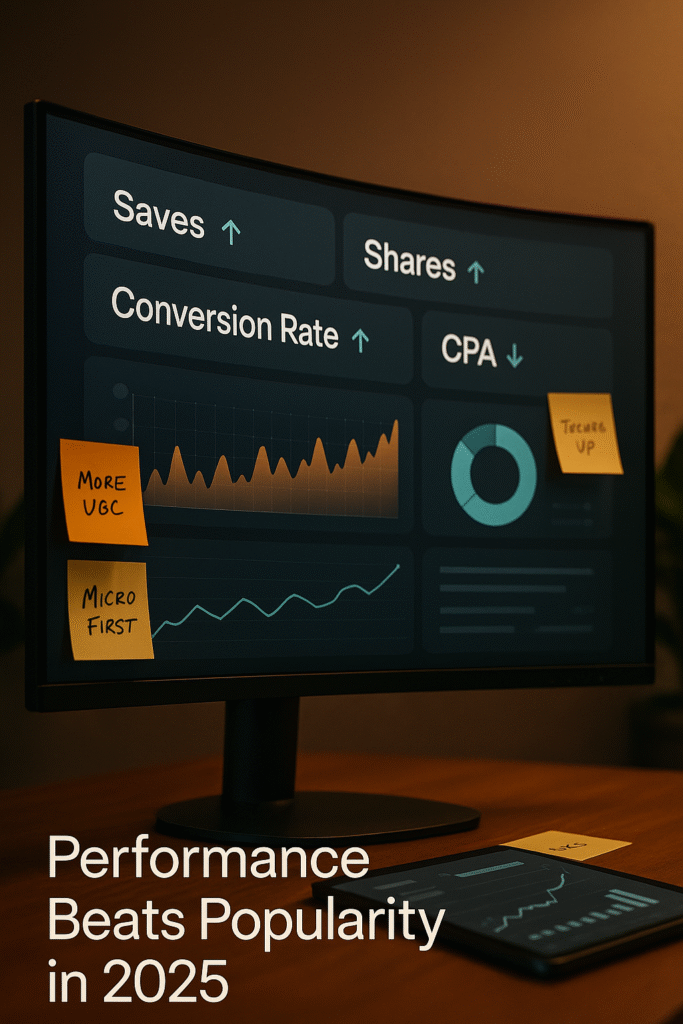
In 2025, brands care far more about performance than popularity. The key question driving budgets now is: Does influencer marketing work? They need to see results.
They measure:
- engagement rate
- saves
- shares
- clicks
- conversions
- cost per acquisition
- repeat purchases
And the surprising part? Micro creators often outperform celebrities on all of these metrics.
Example: Maybelline Sky High Mascara
It didn’t blow up because of a few big influencers. It went viral because thousands of smaller creators shared:
- honest reviews
- application demos
- before-after results
This “creator swarm” effect made the product sell out across multiple markets. Popularity didn’t drive success — performance and authenticity did.
4. Micro & Nano Creators Are the New Powerhouses
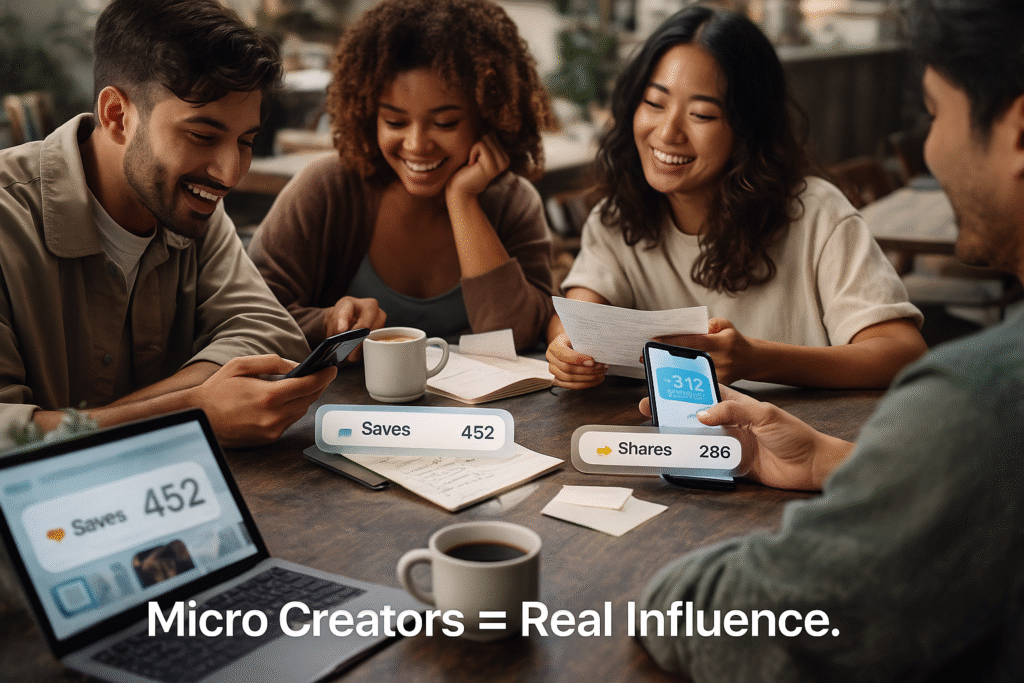
Micro (10K–100K) and nano creators (1K–10K) are at the center of influencer success today. The data proves influencer marketing still works because of this shift to peer-level influence.
Why they dominate
- Deep audience trust
- Higher engagement rates
- More relatable
- Lower cost
- Better conversion potential
Example: Minimalist
Minimalist grew rapidly by working heavily with:
- skincare educators
- ingredient-focused creators
- micro creators who explain routines
These creators don’t just show a product — they explain why it matters. This “education-first” content drives sales far better than traditional ads.
5. Tracking & Attribution Changed Everything
One of the biggest shifts in influencer marketing is measurement. To answer does influencer marketing work, brands must track conversions.
Brands no longer rely on:
- guesswork
- assumed reach
- vanity metrics
Now they track:
- clicks
- DM replies
- link visits
- sales
- coupon redemption
- paid conversions
Thanks to automation, smart links, and DM workflows, brands can now see exactly which creator drove revenue.
Example: Creators using comment-to-DM automation
When someone comments “link,” they automatically receive:
- purchase link
- discount code
- product details
This boosts:
- engagement
- conversion
- remarketing opportunities
Influencer marketing became more valuable the moment it became measurable.
6. Creator-Led Discovery Is Growing Faster Than Ads
Social platforms prioritize creators over brands because people trust people — not ads. This is the new reality driving influencer marketing success.
Consumer behavior in 2025
- 70%+ discover products through creators
- 60% trust influencer recommendations more than brand ads
- 40% try a product after watching reviews or UGC
Example: Dyson Airwrap
The Dyson Airwrap went viral not from one big campaign but because:
- thousands of creators posted honest tutorials
- real results built trust
- everyday users validated its performance
Creators didn’t “sell” — they simply showed how to use it. That’s what drove billions in revenue.
7. Long-Term Influencer Partnerships Drive Real Impact
Brands now invest in influencers for months, not days. Why? Because trust builds over repeated exposure.
Example: boAt
They frequently collaborate with:
- tech reviewers
- lifestyle influencers
- fitness creators
These creators integrate boAt into their everyday content, making the brand feel present but not pushy. Long-term storytelling > one-hit collaboration.
8. The Best Influencer Marketing Is Integrated, Not Isolated
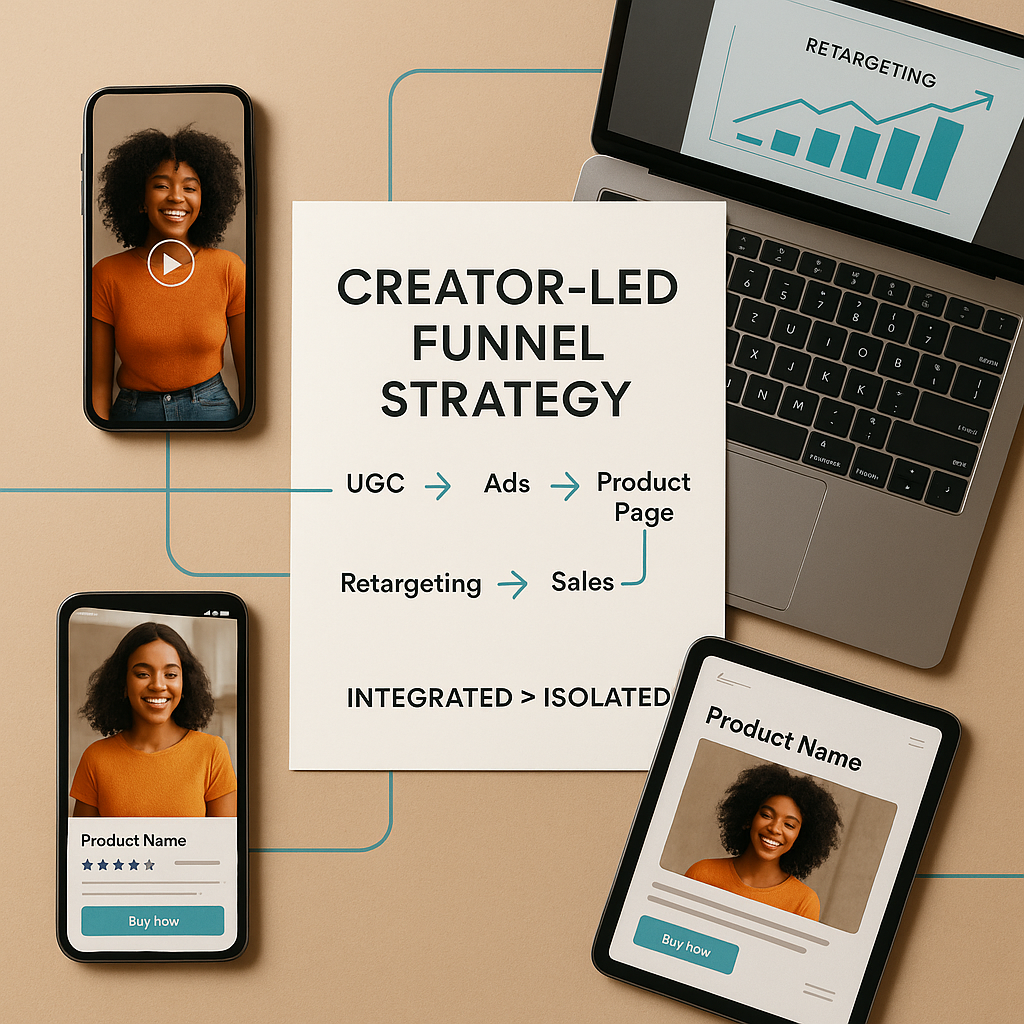
Influencer marketing today isn’t just about one reel. It’s a full-funnel growth engine.
Brands use influencer content for:
- ads
- product pages
- testimonials
- emails
- retargeting campaigns
Example: Sugar Cosmetics
They repurpose creator videos into:
- Instagram ads
- YouTube pre-rolls
- Website product demos
This drastically reduces production cost and increases ad performance.
The Missing Link: Technology Solves the Measurement Problem
So, does influencer marketing work anymore? Absolutely.
What doesn’t work is: ❌ outdated tactics ❌ picking influencers based on follower count ❌ scripted content ❌ unmeasured campaigns
What works is: ✔️ Technology-driven workflows (like Mintlink) ✔️ authentic storytelling ✔️ micro creators ✔️ measurable performance ✔️ long-term partnerships
Influence didn’t die — it evolved.
Conclusion
The headline “Influencer marketing doesn’t work anymore!” creates curiosity — but the reality is the opposite.
Influencer marketing works better than ever in 2025 when brands adapt to audience behavior and modern strategies.
Brands that embrace:
- authentic creators
- educational content
- micro communities
- measurable performance
- multi-channel amplification
…are seeing the highest ROI of any digital channel.
Influencer marketing isn’t ending — it’s becoming the foundation of digital-first brand growth.