Get Started with Mintlink Today!
Automate your “link please” comments and start earning today. Download the free Mintlink app!
Table of Contents
In 2025, the “trust economy” is the only economy that matters. Brands that win aren’t the ones with the biggest ad budgets; they’re the ones who master authentic storytelling. For years, brands poured their budgets into picture-perfect campaigns, polished videos, and copy engineered in a boardroom. But in 2025, that playbook is failing.
We’ve entered a space where honesty and relatability matter more than filters or cinematic ad shoots. Audiences crave stories that feel human, not scripted. Brands willing to show the messy, behind-the-scenes reality are outperforming those still chasing perfection. In this new landscape, trust is the real currency, and authentic storytelling is the only way to earn it.
Why People Are Tuning Out Traditional Ads
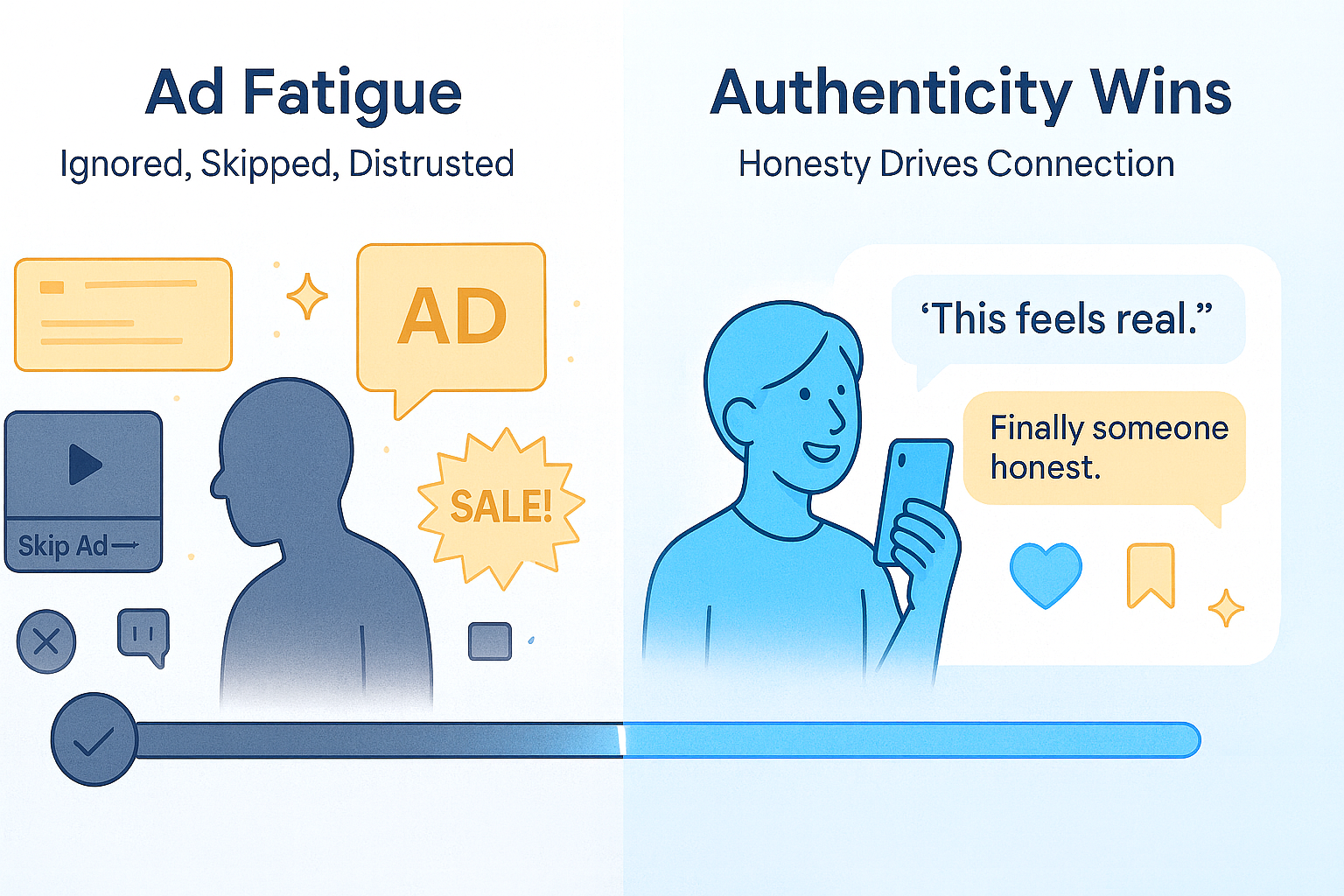
Consumers have spent years dodging banner ads, skipping pre-rolls, and ignoring pop-ups. The result? Exhaustion. Ad fatigue is real, and younger generations—especially Gen Z and Gen Alpha—are calling it out.
Multiple industry studies show the same pattern: audiences are sceptical of overly curated brand messaging. They don’t want to be “sold to”; they want honesty. Deloitte’s Global Marketing Trends report even notes that authenticity has become a primary driver of purchasing decisions.
Campaigns that feel too perfect often fail to connect. Meanwhile, unscripted moments, honest opinions, and raw storytelling cut through the noise.
Storytelling as Today’s Biggest Trust Signal
Storytelling isn’t new, but the kind of stories that resonate today has changed dramatically.
Founder-led storytelling, especially, has taken off. When founders openly talk about the journey, the risks, the pivots, and the failures, audiences feel closer to the brand. These aren’t polished narratives; they’re lived experiences. That’s what makes them compelling.
The same goes for behind-the-scenes footage: the team at work, product-building processes, warehouse days, brainstorm sessions, or even mistakes made along the way. This type of transparency creates a sense of inclusion. It’s no longer “brand vs. consumer”; it’s “we’re building this together.”
The result? A deeper emotional connection that paid ads simply can’t replicate.
Authenticity Outperforms Ad Spend
Paid ads are getting more expensive and less effective. Rising CPMs and algorithm shifts mean brands are paying more for fewer results.
On the flip side, authenticity-driven content often delivers bigger returns at a fraction of the cost. Word-of-mouth, community storytelling, and relatable creator content outperform traditional ads because they feel genuine.
Nielsen continues to show this: recommendations from “people like me” remain the most trusted form of influence. Trust multiplies. Ads don’t.
Gen Z & Gen Alpha Don’t Just Want Authenticity: They Expect It
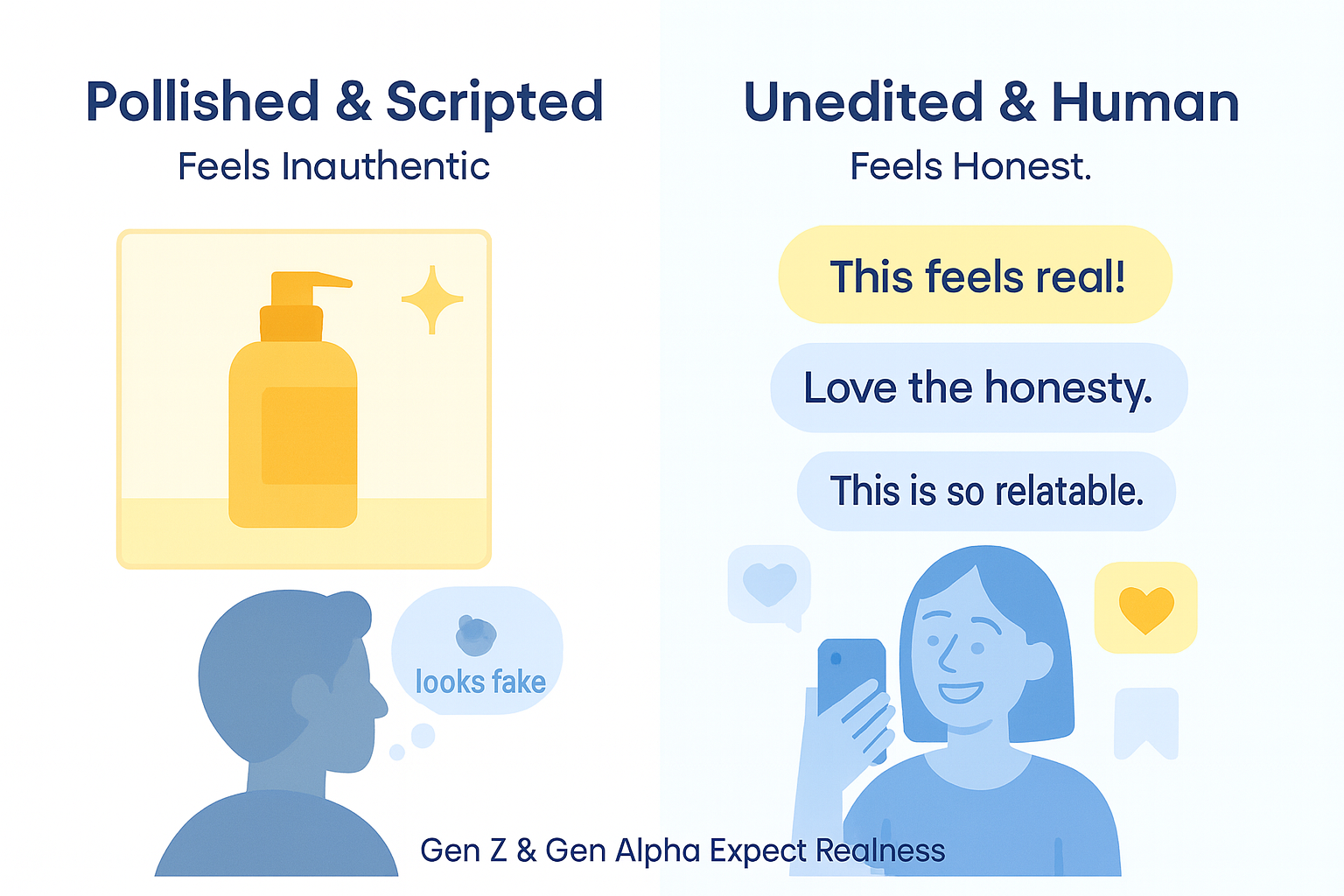
Younger audiences have grown up online. They know when a brand is pretending. They prefer unedited, everyday moments over perfectly staged shoots. Platforms like TikTok and BeReal rewired how they engage. Imperfection feels honest, and honesty feels valuable.
According to recent industry reports, the majority of Gen Z is more likely to trust brands that show behind-the-scenes, unpolished, transparent content. They want brands to speak like humans, not scripts.
For brands targeting these generations, the message is simple: If you’re not real, you’re irrelevant.
Community-Driven Narratives Are the New Brand Megaphone
Communities have become the engine behind modern brand growth. From Discord to TikTok comment sections to niche Reddit groups, consumers are shaping brand narratives—with or without the brand’s involvement. Smart brands aren’t trying to control the message; they’re building spaces where their community can shape it with them.
By sharing real customer stories, amplifying UGC, and having honest two-way conversations, brands tap into trust networks far more powerful than paid reach. The shift is from “broadcasting” to “co-creating.”
Transparency Is No Longer Optional
Authenticity means nothing without transparency. People reward brands that openly share not just wins but challenges—delays, mistakes, improvements, updated processes. Transparency reports, live Q&A sessions, and behind-the-brand videos all build credibility.
Year after year, Edelman’s Trust Barometer shows the same thing: Transparency is now a baseline expectation. When brands show their work, audiences give them something priceless in return: trust.
The Creator’s Dilemma: How to Be Authentic and Still Earn
This new “trust economy” creates a huge problem for creators.
- If they take a brand deal that feels “off” or “salesy,” their audience accuses them of being a sellout, and their trust is broken.
- If they don’t take brand deals, they can’t pay their bills.
This forces them to choose between authenticity and income. But what if they didn’t have to?
This is where the type of monetization matters. The “brand deal” model (a flat fee for a single post) is high-risk. A creator has to promote the product right now, whether it feels natural or not.
This is why the affiliate model is the key to authentic storytelling.
With a platform like Mintlink, a creator is never forced to sell.
- They get paid for what they genuinely love. A creator can use a product for 6 months, decide they truly love it, and then add it to their Mintlink storefront. The recommendation is 100% authentic.
- They use “Quiet, Subtle Influence.” A creator can post a “day in the life” video where a product is just “in the background.” When followers inevitably comment, “What’s that coffee mug?” the creator’s Instagram Comment Automation (powered by Mintlink) sends the link. No hard selling, 100% authentic, 100% monetized.
- They can be honest. Mintlink allows creators to build a sustainable income from the products they do love, giving them the financial freedom to reject brand deals that feel inauthentic.
Mintlink solves the creator’s dilemma. It provides a system where authenticity directly leads to higher income, rather than being a barrier to it.
A New Playbook: 5 Steps to a Trust-First Strategy
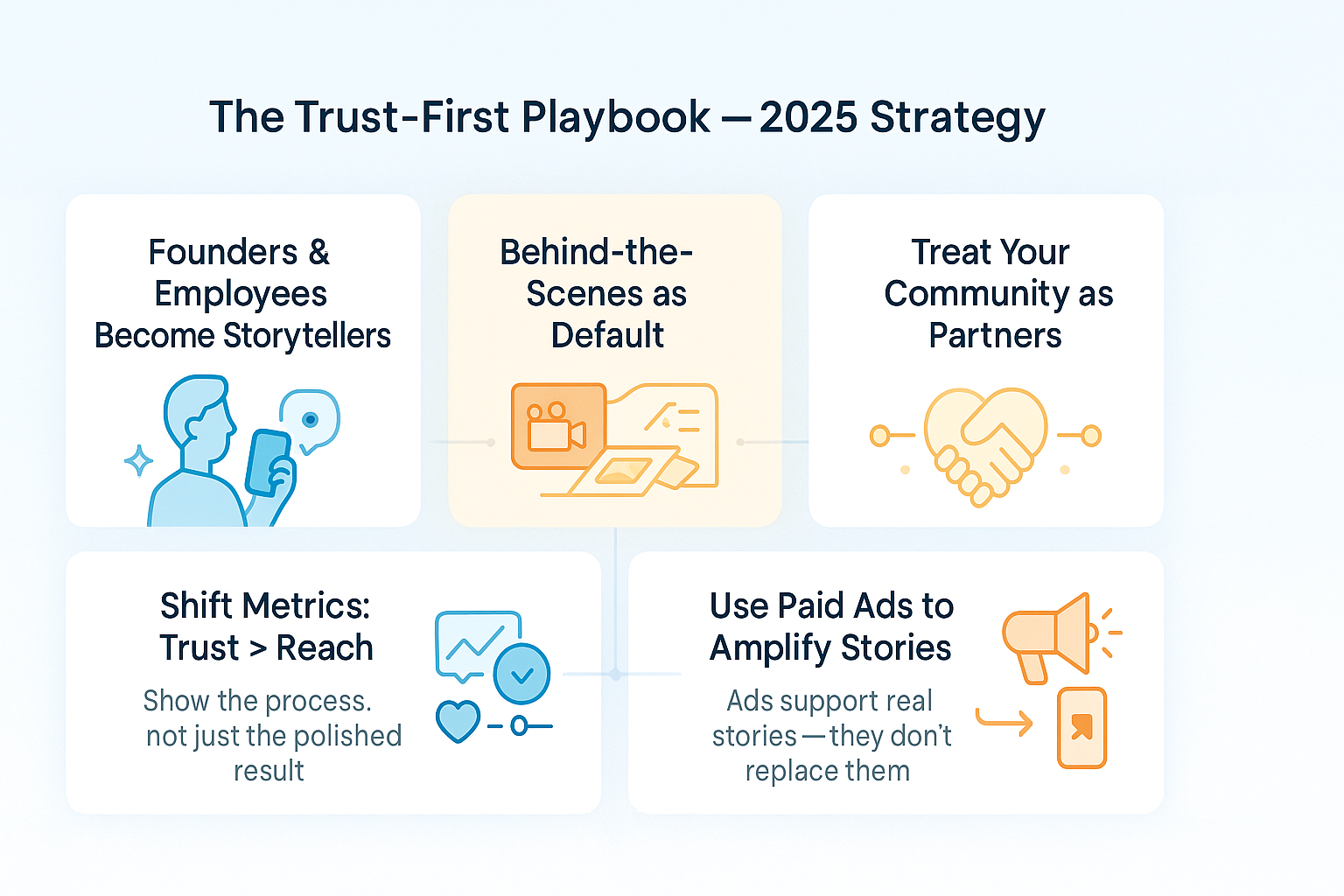
The future of marketing isn’t about choosing between ads or authenticity. It’s about blending both but leading with trust.
- Founders and Employees Become Storytellers Your audience wants to see the people behind the logo. Encourage your founder to share the “why” of the company. Show your product team working on a new feature. This human-centric content is your most powerful marketing asset.
- Make “Behind-the-Scenes” Your Default Stop showing the perfect final product. Show the process. Show the messy workshop, the team debate, the 10 failed prototypes. This isn’t just content; it’s a transparent, authentic storytelling narrative that builds deep, lasting trust.
- Treat Your Community as Partners, Not Spectators Stop “broadcasting” to your audience. Start “co-creating” with them. Amplify their UGC. Feature their stories in your marketing. Ask for their feedback on new products before you launch. This turns your customers into your most powerful (and most trusted) marketing department.
- Shift Your Metrics from Reach to Trust Stop obsessing over “Impressions” and “Reach.” Start measuring what matters: Sentiment (What are people saying?), Advocacy (Are they defending you in comment sections?), and Trust (Are they sharing your story?). These are the new KPIs for 2025.
- Use Paid Ads to Support Stories, Not Replace Them Paid ads still have a role, but their job has changed. Don’t use ads to introduce your brand (a cold, low-trust interaction). Use ads to amplify the authentic stories your community is already telling. Boost your best-performing UGC. Retarget people who watched your “founder story” video. Use ads to feed the “trust engine,” not to be the engine itself. This is how you build a real brand.
Frequently Asked Questions (FAQs)
Q1: What is authentic storytelling? A: Authentic storytelling is a marketing approach that prioritizes honesty, transparency, and a human-centric narrative. Instead of polished ads, it involves sharing real stories, behind-the-scenes processes, and even failures to build a genuine connection and trust with an audience.
Q2: Why is the “trust economy” so important for Gen Z? A: Gen Z and Gen Alpha have grown up online and are highly skeptical of traditional advertising. They can instantly spot an inauthentic, “salesy” post. They prioritize and trust brands that share their values, are transparent, and communicate with a real, human voice. For them, trust is a non-negotiable part of a purchasing decision.
Q3: How can my brand be authentic without looking unprofessional? A: Authenticity doesn’t mean “low quality.” It means being “human.” You can still have beautiful product shots, but you should pair them with a “behind-the-scenes” video of your team. You can still have a professional founder, but they should share real stories about the struggle to build the company, not just the “perfect” end result. It’s about honesty, not a lack of polish.
Conclusion: Trust is the New Currency
In a world where attention can be bought but trust can’t, authentic storytelling becomes the most powerful form of marketing. As consumers drift away from highly polished ads, they move toward brands that share real experiences, real people, and real values.
Authenticity builds connection. Connection builds loyalty. And loyalty—especially from Gen Z and Gen Alpha—is worth more than any ad budget.
The brands that win won’t be the ones shouting the loudest. They’ll be the ones telling the truth.